The beauty industry loves a bold launch. But sometimes, innovation alone isn’t enough.
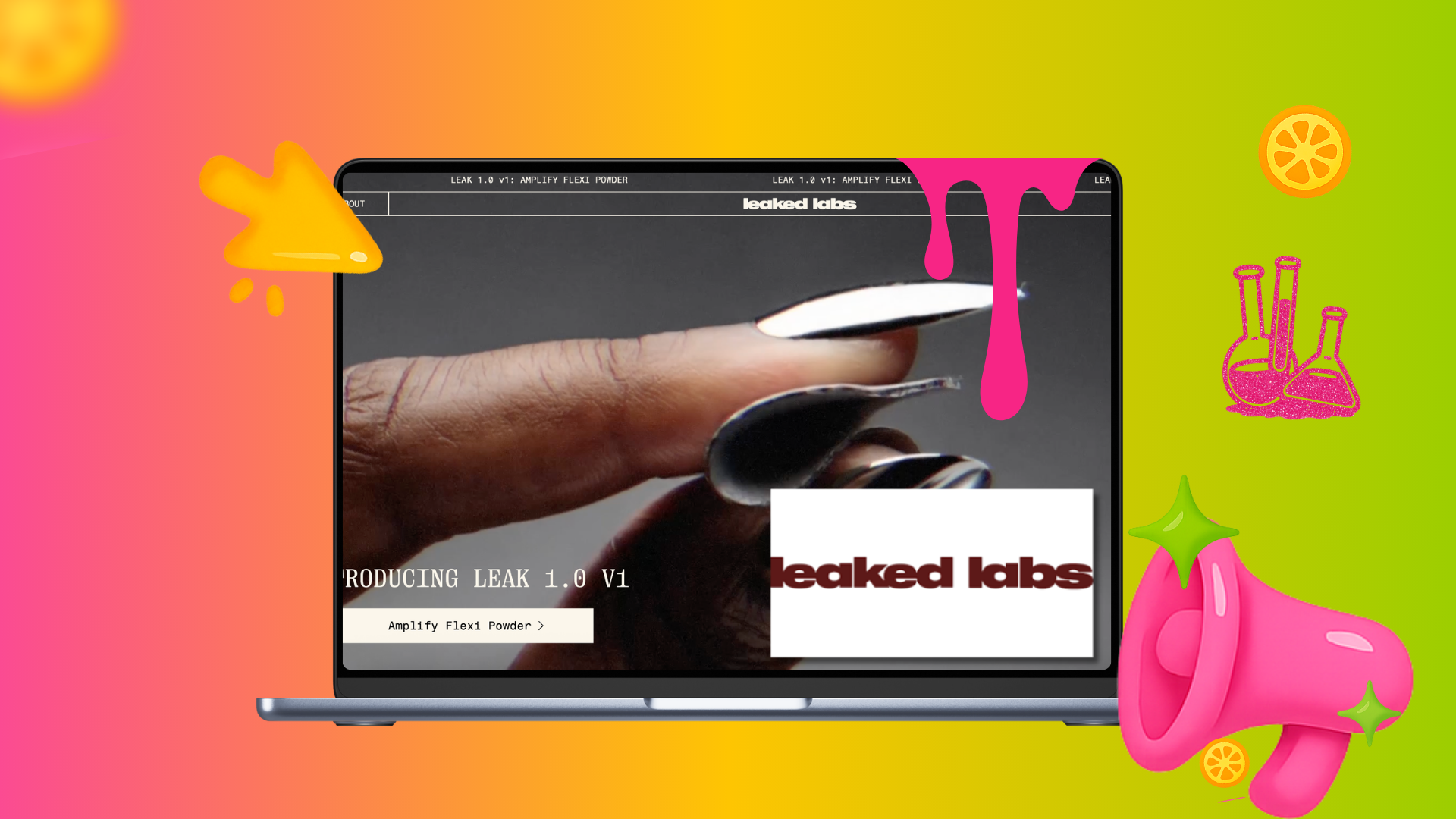
The debut of Leaked Labs’ Amplify Flexi Powder is a fascinating example of how brand promise, customer expectations, and business strategy can make or break even the most talked-about product.
Let’s break down what happened, and what marketers can learn from it.
The Product That Got Everyone Talking
I’m sure by now you’ve heard about the flexible powder that changes intensity when sprayed with water.
The product — Amplify Flexi Powder — immediately generated massive attention across TikTok and beauty YouTube.
But attention didn’t translate into admiration.
While the launch successfully generated conversation, a large share of the discussion quickly turned negative.
Common criticisms included:
- The product gets your hands dirty
- It has no clear functional advantage over traditional powders
- Concerns about sanitation, especially when water is sprayed onto a product touched with fingers
- Confusion about what problem the product actually solves
Before judging the outcome, though, it’s important to understand the strategy behind the brand.
Where Flexi Powder Came From
Flexi Powder originated in an Italian cosmetics lab, developed by chemist Andrea, reportedly inspired by the flexible texture of lasagna.
The formula was later picked up by the new beauty brand Leaked Labs, founded by beauty influencers Alexis Androulakis and Dr. Christina Basias Androulakis.
According to the official website, the product is described as:
“Leaked Labs’ debut innovation is Amplify Flexi Powder, a shape-shifting pigment sheet that challenges traditional definitions of powder… The future of pigment isn’t static. It’s moveable, emotional, and infinitely expressive.”
The messaging clearly positions the product not just as makeup, but as technological innovation.
And that framing is key to understanding the brand.
The Real Product Is the Concept
Many critics focused on the Flexi Powder itself.
But the founders have repeatedly emphasized that Leaked Labs is not just a makeup brand — it’s an innovation platform.
Their core idea is simple:
Leak beauty innovations early and let consumers decide what survives.
Instead of traditional launches, the brand uses controlled releases.
Each release is called a “Leak.”
The system works like this:
- Products are released in limited quantities
- Each launch receives a Leak Number
- The market response determines whether the product:
- becomes part of the core line
- goes back to development
- disappears entirely
In other words, the brand is attempting to open the product development process to consumers.
From a strategic perspective, this idea isn’t entirely new.
Many startups use rapid iteration and market validation, a concept popularized by the Lean Startup methodology (Ries, 2011).
However, Leaked Labs introduces a twist:
Customers pay to participate in the experiment.
The Brand Relevance Problem
This is where the core marketing issue appears.
In modern branding theory, strong brands must achieve brand relevance. According to David Aaker, a brand is relevant when consumers see it as credible and meaningful in the context where they are making a decision.
Awareness alone is not enough. Consumers must clearly understand why the brand matters to them.
A relevant brand solves a problem. It fits the consumer’s needs, habits, or routines.
Leaked Labs presents itself as “the next generation of beauty.” The brand promises unprecedented visibility into the product development process. It releases experimental formulas earlier than traditional cosmetic brands.
For many consumers, makeup serves a practical purpose. It is part of a daily routine. People use it to feel confident, polished, or professional.
Research has shown that cosmetics can increase perceptions of attractiveness, competence, and professionalism (Etcoff et al., 2011).
In that context, a product framed as an experiment in development may struggle to appear relevant.
The challenge for Leaked Labs is therefore not only innovation. It is translating that innovation into clear consumer relevance.
The Real Question: Why Are Customers Paying to Test Products?
Consumer satisfaction depends heavily on expectation fulfillment.
Richard Oliver’s model explains satisfaction as a process with four main steps:
- Expectations: Consumers form expectations before purchasing.
- Perceived Performance: After using the product, they evaluate how it actually performs.
- Disconfirmation: Consumers compare expectations with reality.
- Three outcomes occur:
- Positive disconfirmation → performance exceeds expectations
- Confirmation → performance meets expectations
- Negative disconfirmation → performance falls short
- Three outcomes occur:
- Satisfaction or Dissatisfaction
- Satisfaction results from confirmation or positive disconfirmation
- Dissatisfaction results from negative disconfirmation.
This matters because customers purchasing a cosmetic product expect it to work reliably.
They do not expect to participate in an experimental development cycle.
And this tension quickly surfaced online.
One Reddit user summarized the concern:
“Product testers aren’t usually paying for the product they test… why is anyone paying to test products?”
Another issue raised was iteration:
If a product returns to the lab and is improved, early buyers may need to repurchase the next version — assuming they can even access it due to limited releases.
From the customer perspective, this can feel less like innovation and more like paid beta testing.
The founders addressed this issue in an official TikTok video, whose setting mimics a press conference:
To the question, “Why am I paying for an unfinished product?”, the brand responds:
“You’re not paying for an unfinished good, and you’re not paying to do the work for us. You’re paying to participate in beauty’s largest public focus group that’s being documented.”
Once again, the brand attempts to frame the purchase as an experience rather than a simple transaction.
However, this narrative overlooks a crucial distinction: in traditional product development, focus groups are compensated by the brand for their feedback, not the other way around. By contrast, Leaked Labs asks consumers to pay for the opportunity to participate in the testing phase, shifting the cost of experimentation from the company to the customer.
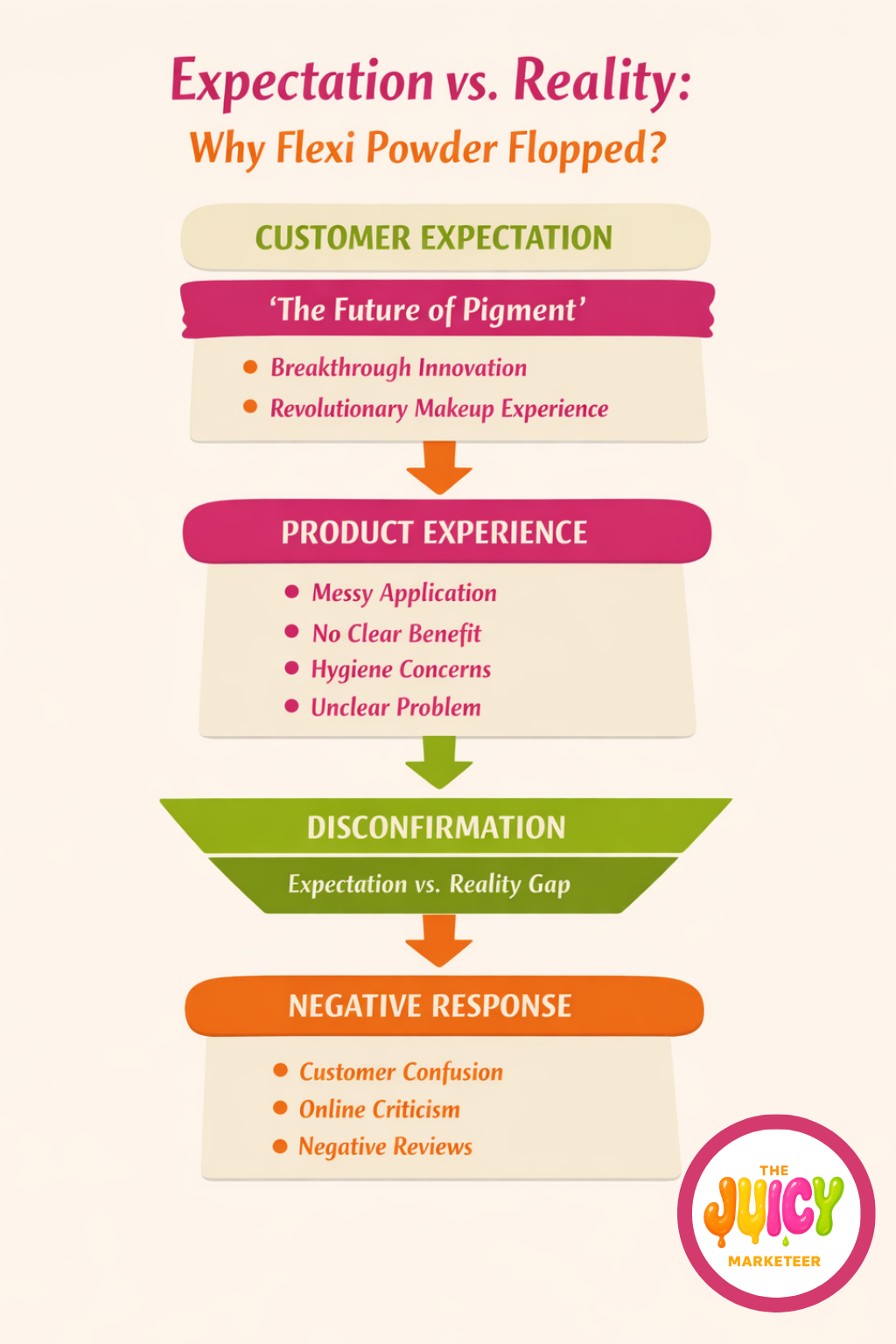
Download the infographic
Download the infographic summarizing the Expectation vs Reality process explained in the article.
Innovation Without a Clear Problem
Another challenge is that consumers struggled to understand what problem the Flexi Powder solves.
Good innovation typically follows a clear value proposition.
David Aaker emphasizes that strong brands rely on meaningful differentiation that resonates with consumers, rather than superficial novelty (Aaker, 2025)
Many reviewers questioned whether the flexible formula provided any real benefit over:
- traditional pressed powders
- loose powders
- cream pigments
Without a clear functional advantage, innovation risks appearing gimmicky.
The Strategy Isn’t Actually New
Interestingly, the core business logic behind Leaked Labs isn’t particularly revolutionary.
Companies have always tested products in the market before committing to large-scale production.
A good example is Wycon Cosmetics.
The brand once released a massive range of affordable lip liners, often exceeding 40 shades.
They continuously added colors aligned with trends — especially:
- cool-toned nudes
- brown shades
- 90s-inspired palettes
By observing which shades gained popularity, Wycon later developed long-lasting premium versions of those exact colors at higher price points.
The strategy worked.
Those upgraded lip liners sold out.
But there was one key difference.
The Expectation Gap
Wycon’s initial products were never presented as experiments.
They were simply affordable cosmetics.
Even if they weren’t long-lasting, they still performed their intended function.
Most importantly:
They fulfilled the customer’s expectations.
And fulfilling expectations is one of the most critical drivers of brand trust.
According to Kotler and Keller, trust is built when companies consistently deliver on their brand promise.
If expectations are not met, customers don’t just dislike the product — they begin to question the brand itself.
Key Marketing Takeaways
1️⃣ Innovation must solve a clear problem
Novelty alone rarely sustains consumer interest.
2️⃣ Brand relevance is key
If your product is not relevant, it is useless.
3️⃣ Testing products publicly can backfire
Consumers usually expect brands to test products before selling them, not after.
4️⃣ Attention ≠ success
Virality can generate awareness, but trust and value build brands.
Innovation in the beauty industry is increasingly difficult, and this does not mean it should be discouraged.
However, the market ultimately does not reward effort alone.
Consumers rarely care how much research, experimentation, or creativity went into a product.
What matters is whether the product delivers clear value. If it does not resonate with consumers, it simply does not succeed.



Leave a Reply